Introduction
The fast pace of modern life implies that our brain takes in huge amounts of information and makes thousands of decisions every day: what to wear, say, eat, which work projects to handle first, come Monday. To sort through this constant barrage of information and the subsequent need to act on the said information, the mind creates mental shortcuts. It’ll group people and tasks in categories so we can take decisions faster.
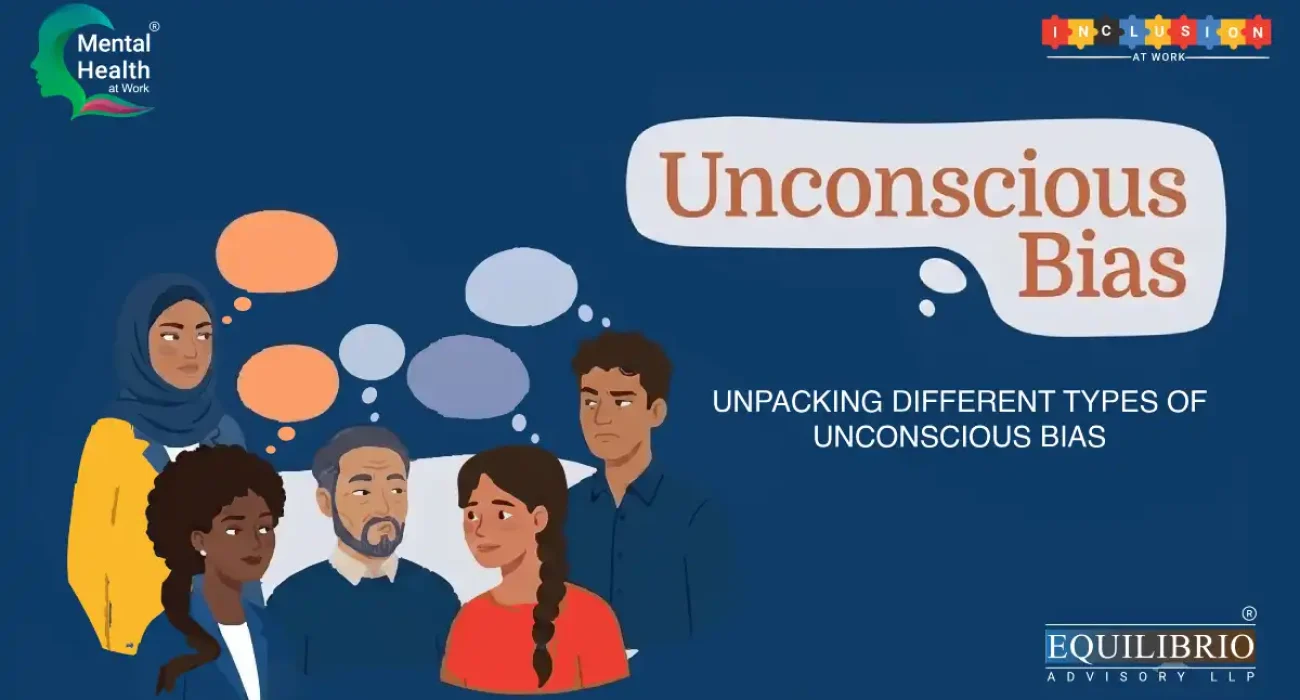
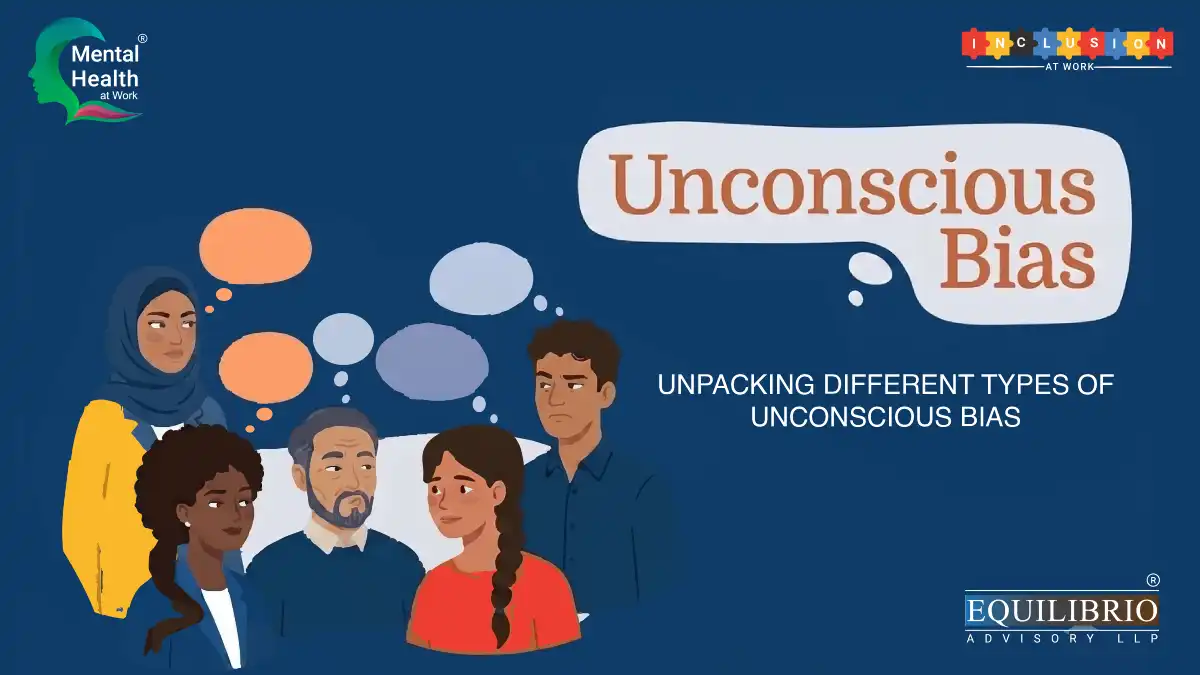
Unconscious bias refers to learned stereotypes that unconsciously influence our behaviour.
Everyone has biases or filters. It is a characteristic of the human mind which relies on shortcuts to make quick decisions.
These biases get ingrained in us from our experiences, our cultures and our upbringing. They do not necessarily originate with malicious intent; however, if we are not careful, they can sometimes have a negative impact.
Understanding Unconscious Bias
Unconscious bias works quietly in the background, so we don’t often realise when it is coming into play. However, the problem is letting them filter our decisions in an unfair manner.
Let’s look at an example of unconscious bias.
A person grows up in a community that associates people who wear red with danger. No one in their neighbourhood ever wears red. Now when they grow up and leave their community to go to college, they see other persons wearing red. Due to their internal cultural frame of reference, they believe that those wearing red are also dangerous. This unconscious bias, leads them to avoid all who are wearing red.
Relying on previous information to make sense of the world is a natural human trait. However, this could lead to unfair consequences for others meeting this person. For example, what if they were on a college team and had the role of deciding who else might be on the team. The bias against red may lead them to leave out people who have worn red in the past.
The phenomenon of perception bias comes into play here. It refers to when we perceive people based on our inner stereotypes and subjective assumptions.
For instance, the person who avoids all who wear red, will be limited in their perception by their bias. They will not be able to see the persons behind the red colour and make informed choices.
Unconscious biases can often stand in the way of creating communities where differences are embraced. Because bias is rarely obvious. Since it works below our level of conscious awareness and without looking for it, it can be easily missed.
Types of Unconscious Bias
As conversations around diversity, inclusion and equity in the workplace evolve, the spotlight often falls on the issue of unconscious bias at work. It can show up in different forms. Here are some of the most common ones seen at work.
Affinity Bias
For thousands of years, humans survived by being part of tribes that protected and nurtured them. From this evolutionary impulse of feeling safer with similar kind of people emerges affinity bias. It simply refers to preferring those that are like us. It is very natural to feel a camaraderie with those that share traits and values with us.
However, affinity bias can manifest in ways that result in preferential treatment to those of the same ethnicity, sexuality, religion, birthplace or more. In a workplace, this can create an environment where there is a lack of diversity and inclusion, making minorities feel less important.
For instance, affinity bias can show up when a hiring manager mostly employs people with whom they share a common language.
Confirmation Bias
Let’s remember all our unconscious biases stem from the need to make sense of the world around us. This is very apparent in the phenomenon of confirmation bias. This type of bias reflects our tendency to seek out information that supports our beliefs and ignore information that does not align with it.
For instance, if we believe that people who love comedy films are not serious. Then we might only focus on scenarios that prove our belief, while overlooking information that could indicate the opposite.
Halo and Horns Effect
The Halo and Horns Effect describes how first impressions skew our idea and subsequent treatment of a person.
The Halo Effect comes into play when we are impressed by a positive trait in someone. This first positive impression might lead us to overlook mistakes they make or make other assumptions about them without any evidence.
For instance, a team lead is impressed by a new joinee who has created a good presentation. Given this positive impression, the team lead may assume that this person is also a superb public speaker without actually assessing their skill sets.
Conversely, the Horns Effect emerges when noticing a negative trait leads to the assumption that a person is overall flawed. This can lead to a hyper-fixation on a person’s negative traits while completely ignoring their strengths.
For instance, a person turns up late for a meeting and their colleague makes the unconscious judgement that ‘this person is never on time’. This leads the colleague to only notice when they are late, expecting them to be late, while ignoring every instance where the person does make it to appointments on time.
Gender bias/ Sexism
We live in a world where gender inequity is a social reality. This inequity shows up through the traditional structures that uphold gender norms, which are also reflected through the societal systems and cultural environments.
In spaces where gender inequity is normalized, individuals may grow up with unexamined biases around gender. There can be unconscious assumptions based on gender, usually considering one gender to be superior to another. These inaccurate beliefs around gender may lead to discriminatory behaviour, that is also known as sexism.
Biases around gender mainly show up through two different assumptions: that men are superior, and that women are inferior. Such biases can manifest in the workplace through attitudes like “women are not serious about their jobs once they have a child”, or “all men are naturally born leaders”.
Bias around ability/ Ableism
Ableism refers to biased attitudes or beliefs towards disabled persons. At its core, is the incorrect assumption that disabled people are weaker or less capable, therefore less worthy than non-disabled people. Ableism can reflect in our society through language, actions or even social systems and structures.
For instance, when we use words like ‘dumb’, ‘lame’ to express humour or frustration. Without meaning to, we can perpetuate harmful ableist stereotypes through these words. Even apparently well-meaning statements like, “Oh poor dear! It must be so hard being a disabled person” can reflect pity for a disabled person, where we incorrectly assume that disability equates a low-quality life. These biases and assumptions can strike at the dignity, humanity and autonomy of the disabled community.
Ableist bias can also show up in social and digital spaces. A restaurant that isn’t accessible, reflects the ableist assumption that disabled persons do not enjoy dining out. Or a software that is not accessible to disabled persons belies the assumption that disabled persons do not use technology.
Caste bias/ Casteism
In India, the caste system had propagated for millennia without being questioned. This system was based on the inaccurate belief that a person’s occupation makes them superior or inferior in society. Although with the drafting of the Indian Constitution, caste discrimination was banned, it still continues unchecked in several parts of the country.
Since the caste system was normalized through generations, we may unconsciously carry beliefs around caste that have been passed down through our socio-cultural environments. It can show up through our attitudes, language or actions. It manifests as treating people differently based on their caste identity.
It could be unintentional, but it can affect day-to-day conversations in the workplace: who is invited to informal conversations, who gets taken seriously or simply the assumption of who might do a better job.
For instance, two new recruits join a firm; one of them is from a caste-oppressed background. Their team lead assumes that the recruit from a caste-oppressed background is not as capable and avoids giving them important projects. Instead, they assign these projects to the other recruit. The perception of caste stops the team lead from making an accurate and fair evaluation of the two recruits’ skill sets.
Age bias/ Ageism
Of all the unconscious biases, ageism is the most normalized one. It is rooted in the inaccurate assumption that a person’s worth is tied to their age. This bias can shape up in two diametrically opposite manners.
On one hand, ageism leads to the faulty assumption that older people are somehow less capable. On the other hand, often younger people are perceived to be less experienced and smart due to their age.
For example, an older employee may not be given technical roles based on the assumption that ‘older people don’t understand new technologies’.
Conversely, a younger employee, who has proved their capabilities, may still not be given a senior role because of the inaccurate belief that ‘young people are not mature enough to handle senior roles’.
Why is recognizing unconscious bias necessary?
Imagine being programmed with an internal operating system, that only sees the world in reds and blues. It will be really hard to recognize other colours and appreciate them for what they are. The most insidious thing about unconscious bias is that we cannot readily sense it. Like a person who cannot see the colour yellow or green, will not even realize it. Without the right knowledge or awareness, it can be hard to dismantle the filter of unconscious biases.
In an environment where unconscious bias is not acknowledged sexism, casteism, ableism, ageism can gradually take root. Irrespective of the type of bias, these act as invisible filters that dictate who gets hired, who is heard, and who is promoted.
For instance, imagine a new teacher joins a college. She has had an upper-class urban upbringing. With this internal cultural reference, she goes into a classroom. The classroom is a mixture of students from urban, rural and different socio-economic classes.
Who among her students, will the teacher naturally assume to be bright? Smart? Articulate? Who will she bring up to speak in debates? Who will she give a good recommendation for future prospects?
Without the right amount of introspection around internal biases, the teacher can develop a subtle preference for people who look like her, talk like her, dress like her.
That is why, it is important to constantly updating our skills of introspection and the ability to examine our internal cultural biases. Because otherwise, they can seep into our daily interactions and decisions at the workplace.
Making the decision to discard instinctive judgements and embrace active curiosity, helps us move into the space of active affirmation towards marginalized communities. Otherwise, our workplaces run the risk of being built in ways that are not accepting and welcoming of all.
Written by Samaira Kumaran and Usri Basistha