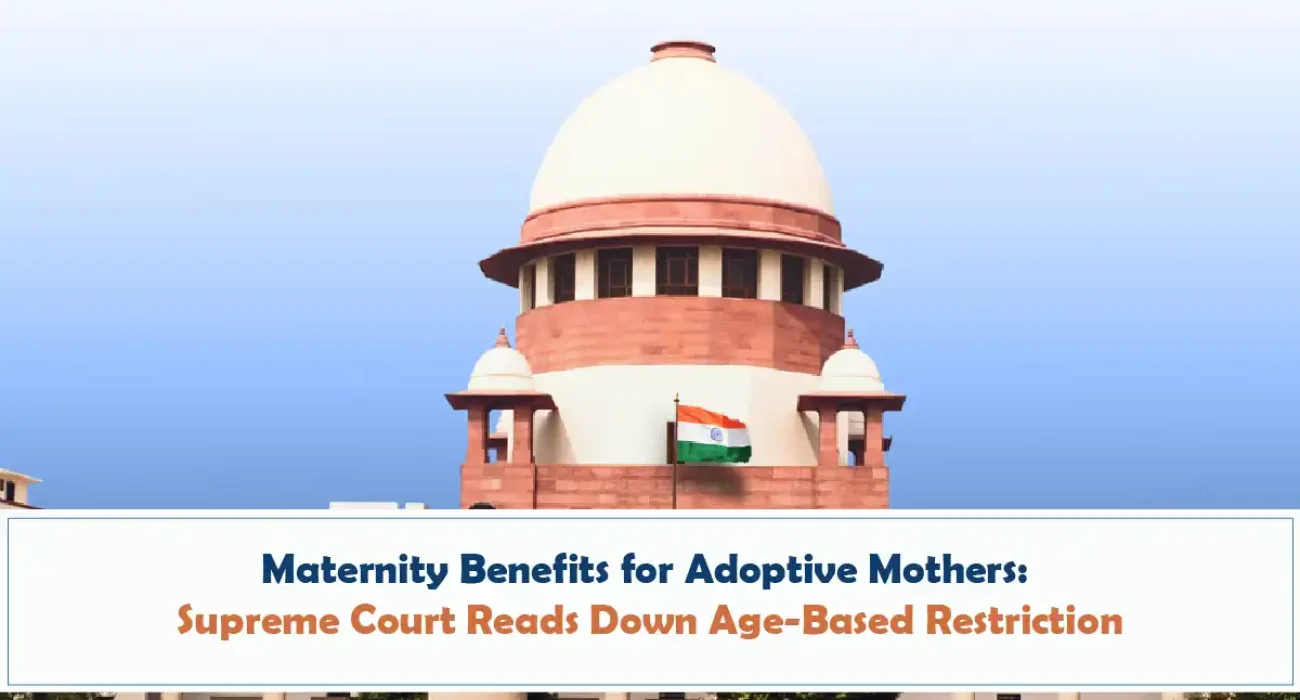
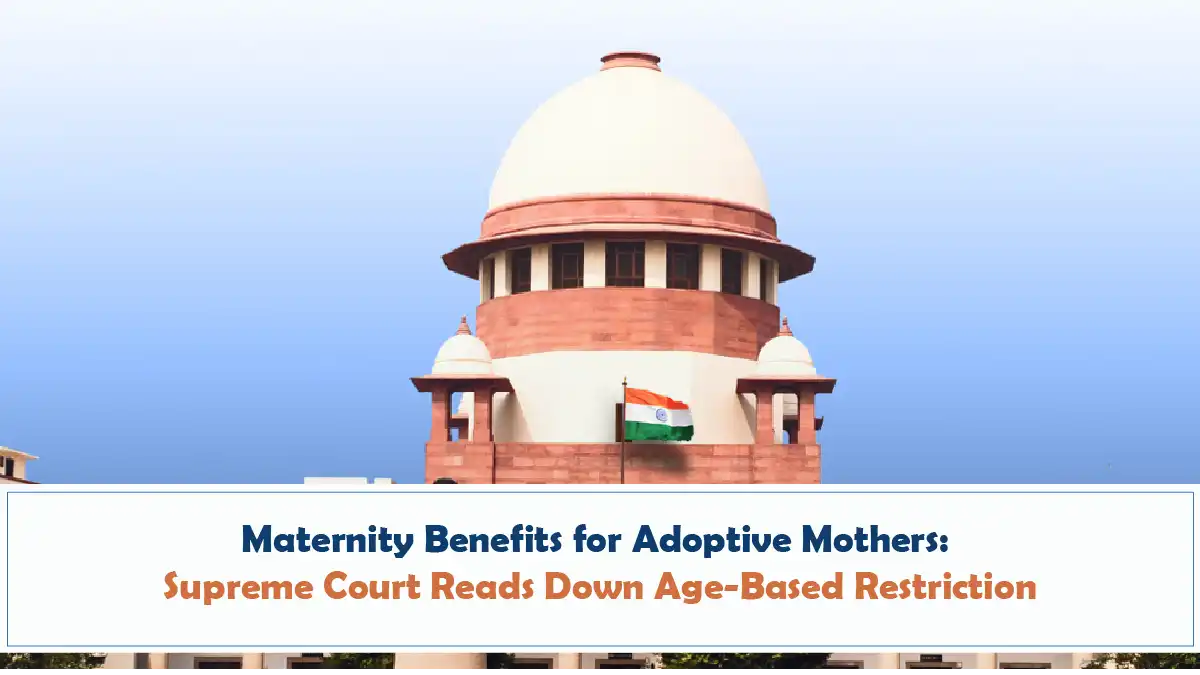
Case: Hamsaanandini Nanduri v. Union of India (2026)
Factual Background
The petitioner, an adoptive mother of two children, filed a writ petition under Article 32 of the Constitution challenging the constitutional validity of Section 5(4) of the Maternity Benefit Act, 1961 and the corresponding provision under Section 60(4) of the Code on Social Security, 2020.
The impugned provisions granted maternity benefits of 12 weeks only to adoptive mothers who adopted a child below the age of three months. The petitioner contended that this restriction created an arbitrary and under-inclusive classification by excluding adoptive mothers of older children, despite their comparable need for caregiving, emotional bonding, and integration of the child into the family.
It was further argued that, given the procedural timelines under adoption laws, particularly under the Juvenile Justice Act and CARA Regulations, adopting a child below three months is practically difficult, rendering the provision largely unworkable. The restriction was challenged as violative of Articles 14, 19(1)(g), and 21 of the Constitution.
Court’s Analysis
Maternity Protection as a Constitutional Right
The Supreme Court recognised maternity protection as a fundamental human and constitutional entitlement, grounded in dignity, equality, and social justice. It held that maternity benefits are not confined to biological motherhood but extend to all forms of motherhood, including adoption.
The Court identified three key components underlying maternity leave:
- physical recovery following childbirth;
- emotional bonding between mother and child; and
- caregiving and integration of the child into the family.
While physical recovery may not apply to adoptive mothers, the latter two components were held to be equally critical and deserving of legal protection.
Article 14: Arbitrary and Under-Inclusive Classification
Applying the test of reasonable classification, the Court held that the three-month age restriction was arbitrary and under-inclusive. It excluded adoptive mothers who were similarly situated in terms of caregiving needs, without any rational nexus to the object of maternity benefit legislation, which is to support motherhood and child welfare.
The Court emphasised that a valid classification must include all those similarly situated. The age-based distinction failed this test, as the need for bonding and care does not diminish solely based on the child being older than three months.
Article 21: Dignity, Reproductive Autonomy, and Child Welfare
The Court held that adoption is an expression of reproductive autonomy and forms part of the right to life and dignity under Article 21. Denying maternity benefits to adoptive mothers of older children undermines both the dignity of the mother and the developmental needs of the child.
The Court also invoked the best interests of the child doctrine, recognising that early caregiving and emotional stability are essential irrespective of the age at which the child is adopted.
Workability of the Provision
A significant aspect of the Court’s reasoning was the practical unworkability of the provision. It noted that the statutory adoption process itself takes several months, making it nearly impossible in most cases to adopt a child below three months.
As a result, the provision was not only discriminatory but also ineffective in achieving its intended purpose.
Broader Social Context
The Court acknowledged the structural realities of caregiving, including the often invisible nature of care work performed by women. It emphasised that social welfare legislation must be interpreted purposively to address such inequalities and to enable women’s meaningful participation in the workforce.
Order of the Court
The Supreme Court held that restricting maternity benefits to adoptive mothers of children below three months is unconstitutional as it violates Articles 14 and 21.
The provision was read down to remove the age-based restriction, thereby extending maternity benefits to adoptive mothers irrespective of the age of the child at the time of adoption.
Written by Adv. K. Sri Hamsa